On Wednesday, November 11, 2026, the historic SS United States (larger than the RMS Titanic) was sunk off the coast of Destin, Florida to become the largest artificial reef in the world. David Platt wrote about the history of the ship in the following excerpt from his 2010 bestselling book Radical: Taking Back Your Faith from the American Dream.
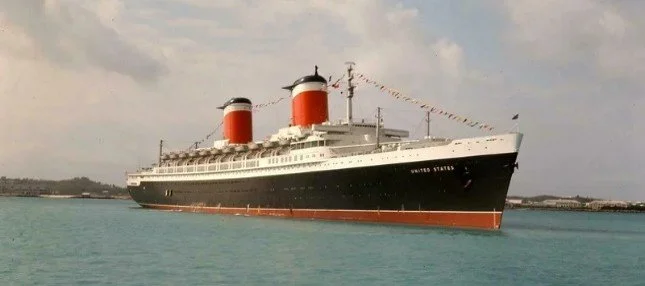
In the late 1940s, the United States government commissioned William Francis Gibbs to work with United States Lines to construct an 80-million-dollar troop carrier for the navy. The purpose was to design a ship that could speedily carry fifteen thousand troops during times of war. By 1952, construction on the SS United States was complete. The ship could travel at forty-four knots (about fifty-one miles per hour), and she could steam ten thousand miles without stopping for fuel or supplies. She could outrun any other ship and travel non-stop anywhere in the world in less than ten days. The SS United States was the fastest and most reliable troop carrier in the world.
The only catch is, she never carried troops. At least not in any official capacity.
Instead, the SS United States became a luxury liner for presidents, heads of state, and a variety of other celebrities who traveled on her during her seventeen years of service. As a luxury liner, she couldn’t carry fifteen thousand people. Instead, she could house just under two thousand passengers.
Those passengers could enjoy the luxuries of 695 staterooms, 4 dining salons, 3 bars, 2 theaters, 5 acres of open deck with a heated pool, 19 elevators, and the comfort of the world’s first fully air-conditioned passenger ship. Instead of a vessel used for battle during wartime, the SS United States became a means of indulgence for wealthy patrons who desired to coast peacefully across the Atlantic.
Things look radically different on a luxury liner than they do on a troop carrier. The faces of soldiers preparing for battle and those of patrons enjoying their bonbons are radically different. The conservation of resources on a troop carrier contrasts sharply with the opulence that characterizes the luxury liner. And the pace at which the troop carrier moves is by necessity much faster than that of the luxury liner. After all, the troop carrier has an urgent task to accomplish; the luxury liner, on the other hand, is free to casually enjoy the trip.
When I think about the history of the SS United States, I wonder if she has something to teach us about the history of the church. The church, like the SS United States, has been designed for battle. The purpose of the church is to mobilize a people to accomplish a mission. Yet we seem to have turned the church as troop carrier into the church as luxury liner. We seem to have organized ourselves not to engage in battle for the souls of peoples around the world, but to indulge ourselves in the peaceful comforts of the world…
Are we willing to fundamentally alter our understanding of Christianity from a luxury-liner approach that seeks more comforts in the world to a troop-carrier approach that forsakes comforts in the world to accomplish an eternally significant task and achieve an eternally satisfying reward?
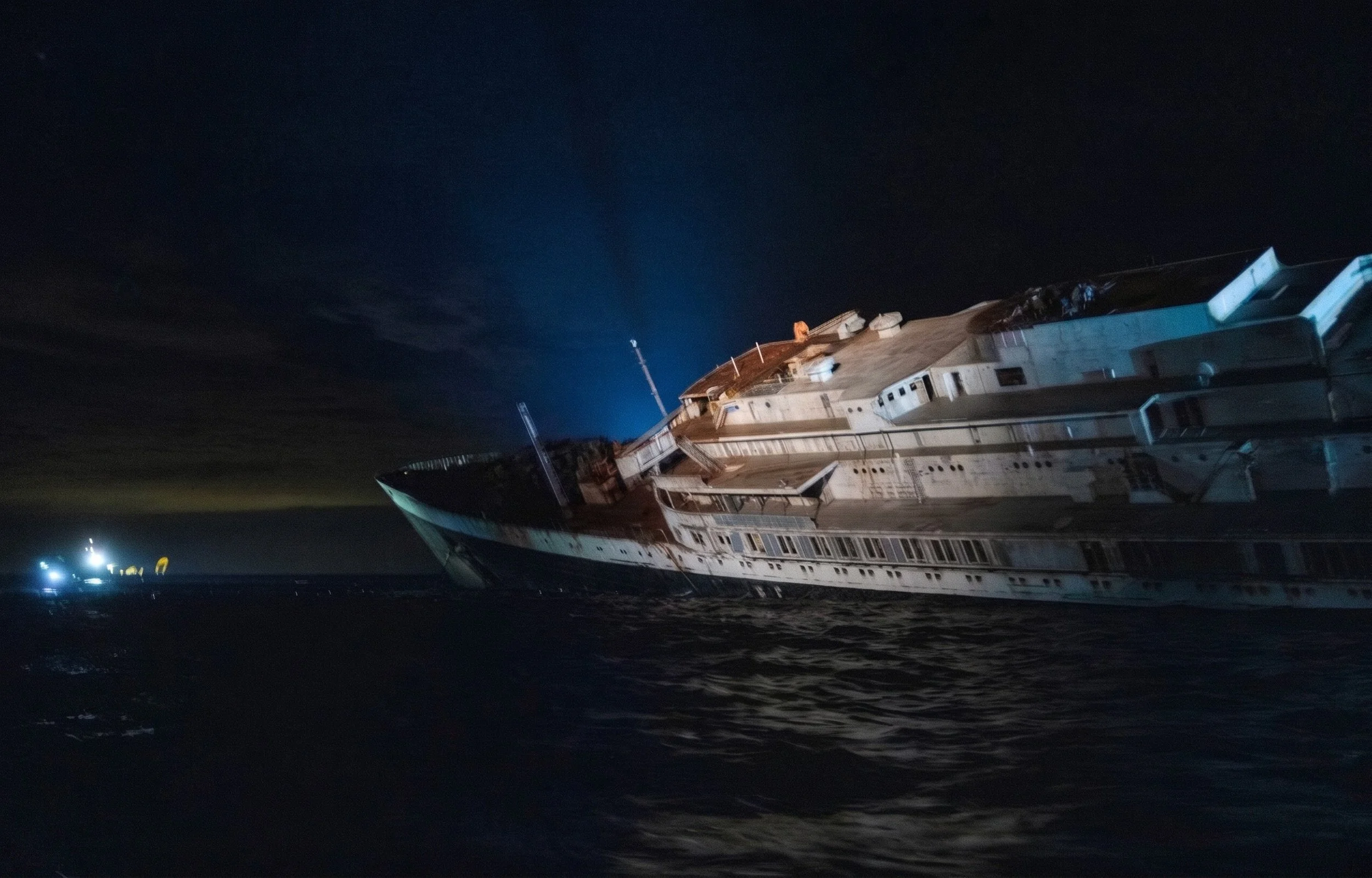
SS United States slowly sinking beneath the waves